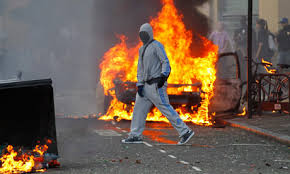
Britain witnessed unprecedented riots during the four days riots of 2011. Numerous young people took to the streets to demonstrate their anger and frustration on the Government and the police this led to wanton destruction of properties and looting of goods. Many reasons were adduced for the rioting that occurred during that period. This blog post will examine the possible causes and effects of the riots.
 |
| Mark Duggan |
A variety of issues prevail as the warrant for the riots, one of the most influential factors that contributed to the ignition of the protest was the shooting of Mark Duggan in Tottenham by the police, witnesses claimed that the young man was unarmed as at the time he was shoot. Many of the rioters claimed that they were targets of police in raids and young people mostly coloured were killed by the police at the slightest provocation. This motivated them to seek revenge against the police. Policing was mentioned by some of the rioters as one of the precipitating factors to the crisis. These rioters also claimed that the way police conducted the stop and search exacerbated the protest. This obviously deepened the entrenched animosity between the local communities and the police. This motivated them to seek revenge against the police. This also brings in the question of race which might have been a factor too.
Poverty could as be presumed as a contributing factor, many of the rioters interviewed after the riots were from relatively from poor areas who sought to vent their frustrations on the shops, this could be linked to the high level of unemployment. This apparently means that unemployment may have played a key role in the riots that occurred . Many of the protesters that engaged in the riots were probably unemployed as their unemployment status precipitated availability for the the riots. According to Lewis (2011) "of those[the rioters] who were not in education and were of working of working age 59% unemployed"
Although many believe a miscellany of issues like increase in tuition fees, abolition of the student maintenance fees and economic injustice could also be a factor. Some of the rioters argued that these benefits should not have been stooped considering it was something enjoyed previously and it cause them more hardship.
Many also perceived the riots as opportunity to to acquire goods and property that they had previously yearned for. As a result of the breakdown of law and order people capitalized on the shortfall in security to loot big shops.
However some of the effects of the riots are numerous but this blog will consider a few. The damage was colossal on businesses as several were torched by the rioters. Many shops within affected areas lost huge amount of money to the riots that engulfed the country, Many shops were broken into some were razed to the ground. The insurance claims were high according to the London School of Political Science " the cost of insurance claim only on London economy alone was estimated to was estimated to be £300 million"
Another effect of the riot is it highlighted the ability to effectively coordinate unrest with the social media especially with networks like the Black Berry Mobile (BBM). Most of rioters were able to congregate at various locations without being spotted by the police because most the messages were dispersed by using the BBM network in contrast to the held idea that twitter and face book were used.
The riots increased prejudiced towards coloured people many white people viewed them as the cause the cause of the riots also the riots lead to wanton arrest and detention of many people.
For further informations http://www.theguardian.com/uk/2011/dec/05/anger-police-fuelled-riots-study,
http://eprints.lse.ac.uk/46297/1/Reading%20the%20riots(published).pdf
References
Lewis, P (2011) 'Reading the Riot' The guardian (2011) [On line]. Available at: www.theguardian.com/uk/series/reading-the-riots (Accessed 8 December 2013)
The London School of Economics and Political Science (2011) Reading the Riots Available at: www/eprints,ise.ac.uk/46297/1/Reading%20the%20%riots (Accessed 8 December 2013)
Another effect of the riot is it highlighted the ability to effectively coordinate unrest with the social media especially with networks like the Black Berry Mobile (BBM). Most of rioters were able to congregate at various locations without being spotted by the police because most the messages were dispersed by using the BBM network in contrast to the held idea that twitter and face book were used.
The riots increased prejudiced towards coloured people many white people viewed them as the cause the cause of the riots also the riots lead to wanton arrest and detention of many people.
For further informations http://www.theguardian.com/uk/2011/dec/05/anger-police-fuelled-riots-study,
http://eprints.lse.ac.uk/46297/1/Reading%20the%20riots(published).pdf
References
Lewis, P (2011) 'Reading the Riot' The guardian (2011) [On line]. Available at: www.theguardian.com/uk/series/reading-the-riots (Accessed 8 December 2013)
The London School of Economics and Political Science (2011) Reading the Riots Available at: www/eprints,ise.ac.uk/46297/1/Reading%20the%20%riots (Accessed 8 December 2013)
